What to Expect at Your First Thai Massage in San Jose
By Nancy, CAMTC-Certified Massage Therapist
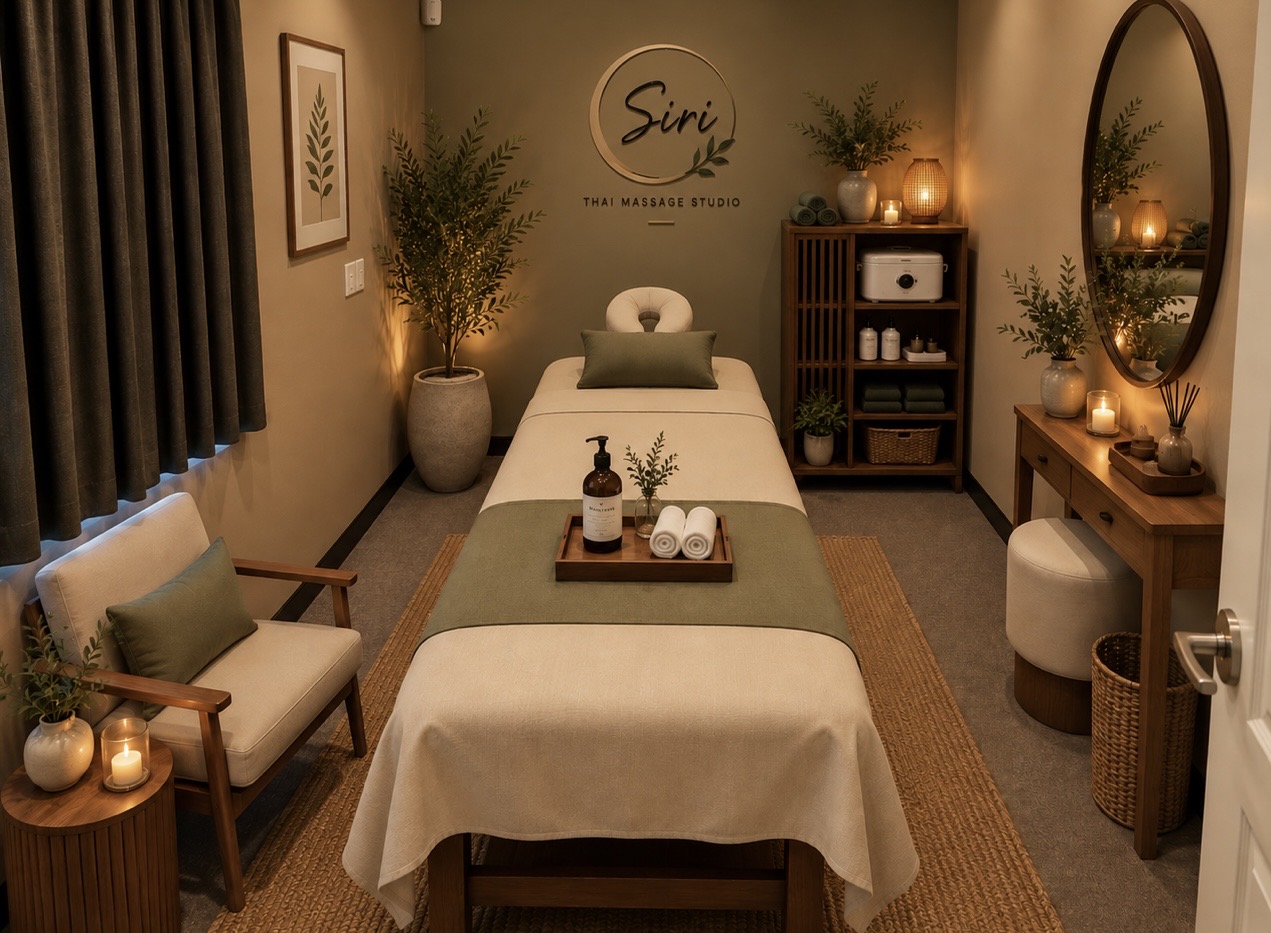
If you've only had a spa massage before, Thai massage can feel unfamiliar. There's more stretching, the pressure can come from palms, forearms, knees and even feet, and you may wonder what to wear or whether it will hurt. This guide answers the questions first-time clients ask us most often at Siri Thai Massage Studio in Willow Glen, San Jose, so you can walk in relaxed.
What is Thai massage?
Thai massage, called nuad thai in Thailand, is a traditional bodywork practice that combines assisted stretching with rhythmic pressing and acupressure. In 2019, UNESCO added it to its list of the Intangible Cultural Heritage of Humanity.
Instead of relying only on long oil strokes, the therapist moves your legs, hips, back, shoulders and arms through stretches adjusted to your flexibility, with pressure along the way. Many clients describe feeling looser and more mobile afterward.
Thai massage is traditionally done on a floor mat. At Siri, every session takes place on a padded Earthlite massage table, with the stretches adapted to it, which is easier on the knees and more comfortable for most people.
How much does a Thai massage cost in San Jose?
Prices vary around San Jose. A 60-minute Thai massage commonly costs somewhere around $95 to $125, depending on the studio and the service.
At Siri, Traditional Thai Massage is $90 for 60 minutes, $140 for 90 minutes and $180 for 120 minutes. Most other services are $90 for 60 minutes. You can compare every service on our services page.
If you plan to come regularly, our packages lower the hourly rate to as little as $75 an hour. Package hours can be used for any massage service, shared with family and friends, and do not expire.
What should I wear?
Come in whatever is comfortable. For Traditional Thai and Deep Tissue, you undress to your underwear and stay fully draped with a sheet; only the area being worked on is uncovered. Oil is optional in Traditional Thai Massage, so you choose whether it's used.
It helps to remove jewelry and watches before your session.
Does Thai massage hurt?
It shouldn't. Firm pressure can feel intense on a tight muscle, but sharp or lingering pain means the pressure isn't right for you.
- Your intake form asks about your preferred pressure and any areas of pain or tension, and Nancy reviews it before starting.
- She checks in during the session, and you can ask for lighter or firmer pressure at any time. Changing the pressure is normal, not rude.
- Slow breathing during stretches helps your muscles let go.
Some people feel mildly sore for a day or so after a first session, similar to after a new workout. It usually fades on its own.
Will the therapist use her feet?
Nancy may use her feet for broad, even pressure in most services. Two support bars run above and parallel to the table, and she holds them throughout, so she controls exactly how much of her weight reaches you. If you'd rather not have foot pressure, ask for hands-only work before or during your session. Feet are never used in Prenatal or Postpartum Massage.
What happens during your first session
- Intake form. You'll complete a short intake form covering your preferred pressure, areas of pain or tension, any health conditions, and anything that has changed since your last visit.
- A quick conversation. Nancy reviews the form with you and asks what you'd like to focus on.
- The massage. In Traditional Thai Massage, she combines assisted stretches with rhythmic pressing and acupressure, adjusting both to your body.
- Afterward. Take a moment before you stand up, and drink some water.
Because Nancy is the studio's only therapist, you'll see the same person every visit.
How long should your first session be?
Sixty minutes is enough if you already know what you want or have one or two areas to focus on. Ninety minutes gives time to work through several areas without rushing, which makes it a comfortable choice for a first visit. A 120-minute session is available if you'd like the longest option.
How to prepare
- Eat lightly in the hour or two before; stretching on a full stomach is uncomfortable.
- Drink water before and after.
- Arrive a few minutes early so you aren't rushed.
- Skip alcohol before your session.
Health, injuries and pregnancy
Tell Nancy about any medical condition, injury or pregnancy on your intake form or before your session. If you're unsure whether massage is right for you, for example after a recent injury or surgery, or if you have a heart or circulation condition, check with your doctor first.
If you're pregnant, book Prenatal Massage instead. It's available from 3 months of pregnancy, and no foot pressure is used. After childbirth, Postpartum Massage focuses on easing tension and helping you relax.
Which Thai massage should you book?
- Traditional Thai Massage: the classic experience, built around stretching and movement.
- Siri Yoga Massage: more guided stretching and mindful movement.
- Thai Aromatherapy Oil Massage: Thai techniques with aromatic oils, for a smoother, more relaxing session.
- Thai Therapeutic Massage: focused on one recurring problem area.
If you're deciding between Thai and deep tissue, read Thai Massage vs Deep Tissue.
Your therapist
Nancy is a CAMTC-Certified Massage Therapist. She trained at Bodhi Panya Institute (BPI) in San Francisco, a CAMTC-approved school specializing in traditional Thai massage, and has seven years of professional massage experience. She speaks Thai and English. Meet Our Therapist.